Limbo has no reels, cards or tables. You choose a multiplier, the game draws one, and the round is settled at once. Limbo is one of the most played instant casino games, and this guide covers the screen, a round from start to finish, and how it compares with other instant games at mobile casinos.
Limbo settles one stake against one number. The game stores your target before it draws the multiplier, then it compares the two figures and pays or takes the stake in the same moment. Limbo does not climb a curve and it does not wait for a second tap. That single comparison is the whole round.
Limbo has two inputs before the draw: the stake and the target. The win preview is the stake multiplied by the target, so the preview changes only when one of those two inputs changes. The drawn multiplier is the only random input, and it arrives after the tap.
The Limbo screen
Most versions use the same small set of controls, which is why Limbo plays well in portrait mode on a phone:
- Bet amount: how much you stake on the round. At crypto casinos this can be a few cents or a few satoshis.
- Target multiplier: your risk setting. A low target such as 1.50x is easy to hit; a high one such as 100x pays more and hits rarely.
- Win preview: the amount you would win if the round succeeds, shown as soon as you enter a bet and a target.
- Result display: the drawn multiplier, usually with a colour change for a win or a loss.
- Round history: a strip of recent results. It is for display only and does not predict anything.
Many casinos also add an Auto mode, which plays a set number of rounds in a row and can raise or lower the bet after a win or a loss.
The Limbo screen keeps the bet field above or beside the target field on most phone layouts. The Limbo screen updates the win preview as soon as either field changes, so you can read the cash result before you commit the round. On a narrow phone the history strip sits under the result, and it stays a record of finished rounds.
Auto mode is a queue, not a second game. You set a round count, a starting stake and optional rules that raise or lower the next stake after a win or a loss. Each queued round still uses the target that is on screen when that round starts. Stop the queue if the stake rule climbs past the amount you planned to lose.
The bet field and the target field are the two inputs that change the outcome of a round. The other controls show the result of those inputs. Read the win preview before each round, because it is the figure the casino pays on a hit.
How to play Limbo, step by step
1. Enter your bet
Type the amount into the bet field. Minimum and maximum stakes depend on the casino, but most versions take anything from a fraction of a dollar (or a small amount of crypto) up to high stakes.
2. Set your target multiplier
This is the one decision that matters. The target sets both your chance of winning and your payout:
- Low targets (around 1.2x to 2x) win most rounds and pay a small profit.
- High targets (10x to 50x and above) lose most rounds and pay much more when they hit.
Depending on the game, you drag a slider or type the number. On a small screen, typing is more precise.
3. Check the potential payout
The win preview updates as you change the bet or the target. For example, a $5 bet at a 2x target pays $10 if it wins, and a $5 bet at 10x pays $50.
4. Start the round
Tap Play (some games say Bet or Go). The game draws a random multiplier straight away and compares it with your target.
5. Read the result
If the drawn multiplier is equal to or higher than your target, you win and the payout goes straight to your balance. If it is lower, you lose the stake.
Type the stake in the casino's own currency or crypto unit, then confirm the minimum before the first round. A rejected bet can clear the field, and a stake you can lose several times in a row keeps the session inside the limit you set.
The target multiplier is a threshold. A lower target needs a smaller drawn number, so more rounds pay a smaller profit. A higher target needs a rarer draw, and the win preview grows with that target. Read the preview as the cash return on a hit. It does not state how often the target hits.
Tap play once and wait for the balance to change. The draw uses the target locked at that tap. A matching draw wins. A higher draw pays the same target, not the higher figure. A lower draw takes the stake and leaves the target in place for the next round.
A target is a threshold, not a forecast. Setting 2x does not mean the draw will reach 2x, and a run of low draws does not make a high target more likely on the next round. Each round is a separate draw, so the target controls the size of a win and how often a hit happens.
What sets Limbo apart
- Payouts are instant. The win or loss is settled the moment the multiplier appears.
- You set the odds. Choosing the multiplier gives you more direct control over risk than a game like Mines, where the result depends on which tiles you pick.
- Most versions are provably fair. At crypto casinos you can usually check each result against the server seed, client seed and hash shown in the game's fairness menu.
- Auto bet is common. Some casinos let you run many rounds with rules that change the stake after a win or a loss. Those rules change how a session swings, not what it costs on average.
Because rounds are so fast, a phone session can run through many bets in a few minutes. Set a stake and a stop point before you start, and use the casino's deposit limits if you play often. Our responsible gaming page lists the tools to look for.
Limbo pays at the target you chose. Limbo does not pay the drawn multiplier when that number is higher than the target, so a 40x draw against a 2x target still returns 2x. That rule is why the preview can be trusted before the round: the cash amount is fixed when you tap.
The fairness menu, where the casino shows one, lists a server seed, a client seed and a hash for the round. Open it after the result if you want to check that the hash was published before the draw. A missing fairness menu means that version does not offer the check, and the round is still a random draw you cannot steer.
Fast rounds change the session, not the maths of one bet. A phone can send dozens of taps in a few minutes if auto mode is on. Set a loss stop and a win stop in the casino's limits before you open the queue. This site's rest-of-world market uses 18 as the minimum age for online casino play.
The payout rule is easy to test before you commit money. Pick a target, enter a stake, and compare the win preview with the balance change on a hit. If the two figures match, the payout works as the screen describes. If they differ, check the casino's game rules before you play for real money.
Limbo compared with other instant games
| Game | Main mechanic | Player control |
|---|---|---|
| Limbo | Set a multiplier and a bet; the result is instant | High |
| Plinko | Drop a ball through a board of pegs; the path is chance | Low to medium |
| Dice | Set a win chance and roll against the threshold | High |
| CoinFlip | Call a 50/50 outcome | Minimal |
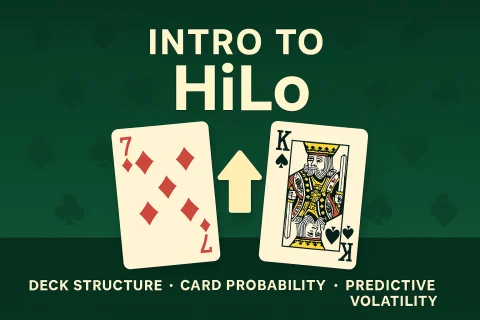
| HiLo | Call whether the next card is higher or lower | Medium |
| Mines | Reveal tiles on a grid and avoid the hidden mines | Medium |
If you like Limbo's pace, crash games, Plinko and Dice also let you choose your own risk level. Mines, CoinFlip and Keno play differently but share the same instant, provably fair format.
Limbo and Dice both let you set the risk before the draw. Limbo expresses that risk as a multiplier. Dice usually expresses it as a chance over or under a number. Plinko hides the path behind pegs, so the same drop can finish in different slots. Use the comparison when you want the same pace with a different control.
Limbo lets you choose one number. Dice lets you choose a range of winning rolls, and Mines lets you choose tiles, where each reveal changes what the next choice risks. For the payout side of the same comparison, read Plinko vs Limbo: which instant game pays more, which compares the two games directly.
How the target sets your odds
The target is a threshold on one random draw. A round wins when the draw is equal to or higher than the target, so the win chance falls as the target rises. Before any casino edge, a target of 2x wins about half of draws, a target of 10x wins about one draw in ten, and a target of 100x wins about one draw in a hundred. These are the ideal figures from the target alone, and the casino's edge lowers them.
The payout moves in the other direction. A higher target pays more on each hit, so the target sets two numbers at once: the win chance and the win size. Multiplying the stake by the target gives the preview, and the ideal win chance is one divided by the target. A player who wants frequent small wins sits low. A player who accepts long losing runs for a larger hit sits high.
Limbo does not combine the two figures for you. The preview shows the cash return on a hit, and it says nothing about how often that hit will come. Read both figures together before you tap.
Planning stakes around the target
A stake plan has to cover the losing runs that a target produces. With a low target, losses come less often, but a streak of losses still arrives, so the stake should leave room for a few losses in a row. With a high target, the losing run is the normal pattern, and the stake should be small enough to survive many rounds without a hit.
The arithmetic is simple. At an ideal 10x target, about one round in ten wins, so a run of ten rounds has about one win on average, and a single win returns ten times the stake. Those figures are before any casino edge, so they show the shape of a session rather than a result to expect.
A stake rule in auto mode changes the spread of the session. A rule that raises the stake after a loss can recover a streak, or it can grow a losing run into a larger loss. Write down the stop rule before you turn the rule on, and keep it unchanged once the queue starts.
Before you play for real money
Limbo has one setting and one tap, so the rules take a minute to learn. Try the demo mode first where the casino offers one, pick a target you are comfortable losing on several times in a row, and only then move to real money at a mobile casino from our rankings.
Open the demo where the lobby offers one and play the same target you intend to use for cash. The demo uses play money, so it shows the controls and the result timing without touching the real balance. Move to cash only after the preview, the win rule and the loss rule match what you expect.
Pick a target you can lose on several times without raising the stake. A low target returns small profits and still loses sometimes. A high target loses most rounds. Either pattern is normal. Stop when the session hits the limit you set.