

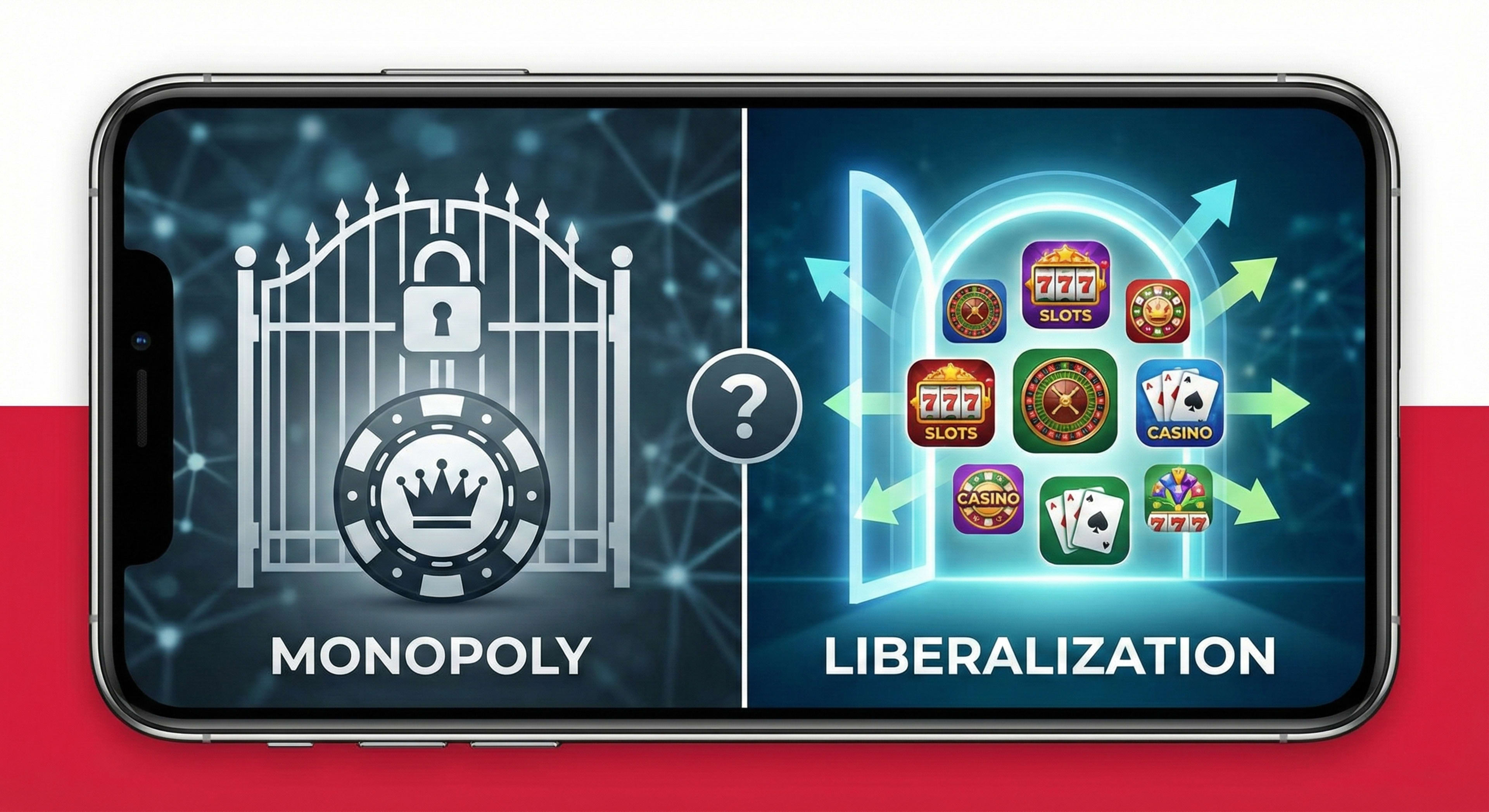
The most relevant recent development concerns Poland's ongoing debate over iGaming liberalization, with implications for mobile access and market structure in a key European market.
Poland Debates iGaming Monopoly Liberalisation
Key Takeaways
- Poland's state-run monopoly on online casinos persists, but industry voices push for liberalization to curb grey-market growth.
- Approximately 40% of online casino activity occurs on unlicensed platforms, with many players unaware of the single legal option.
- Liberalization could improve mobile UX through competition, expand licensed payment options, and strengthen operator-driven security measures.
Poland maintains a strict iGaming framework in which online sports betting is permitted for private operators (subject to a 12% turnover tax), but online casinos remain exclusive to Total Casino, operated by state-owned Totalizator Sportowy. Recent discussions highlight concerns that the monopoly fails to adequately protect consumers. Lobbyists and analysts note that around 40% of the online casino market—and up to 83% of players—gravitate toward unlicensed or grey operators. This fragmentation undermines regulatory goals, as players seek broader game variety, better mobile interfaces, and more seamless experiences that are unavailable on a single legal platform.
The debate centers on whether opening the market to licensed private operators would reduce illegal activity, foster innovation in mobile-first products, and encourage the adoption of secure, regulated payment methods, such as Apple Pay and Google Pay integrations common in competitive jurisdictions. Proponents argue that liberalization could drive improved fraud prevention by encouraging accountable operators to invest in KYC, geolocation, and anti-collusion tools tailored to mobile environments. Critics, including policymakers, defend the monopoly as a safeguard against problem gambling, though evidence suggests the current model steers users to unregulated sites that lack such protections.
For mobile operators and users outside Poland, this underscores persistent challenges in restricted markets: limited app availability (often web-based due to store policies), reduced competition in UX/design, and slower rollout of advanced mobile features. If Poland moves toward liberalization, it could signal broader EU trends favoring competitive, mobile-optimized licensed ecosystems over state monopolies.
Sources