


Google Enhances Sideloading Security

Recommended casinos
Key Takeaways
- Google is implementing a "high-friction" installation process for sideloaded Android apps to warn users of potential risks.
- The update requires internet connectivity for developer verification and includes multiple warning prompts.
- Rollout begins in select markets like Brazil and Indonesia in September 2026, with global expansion planned for 2027.
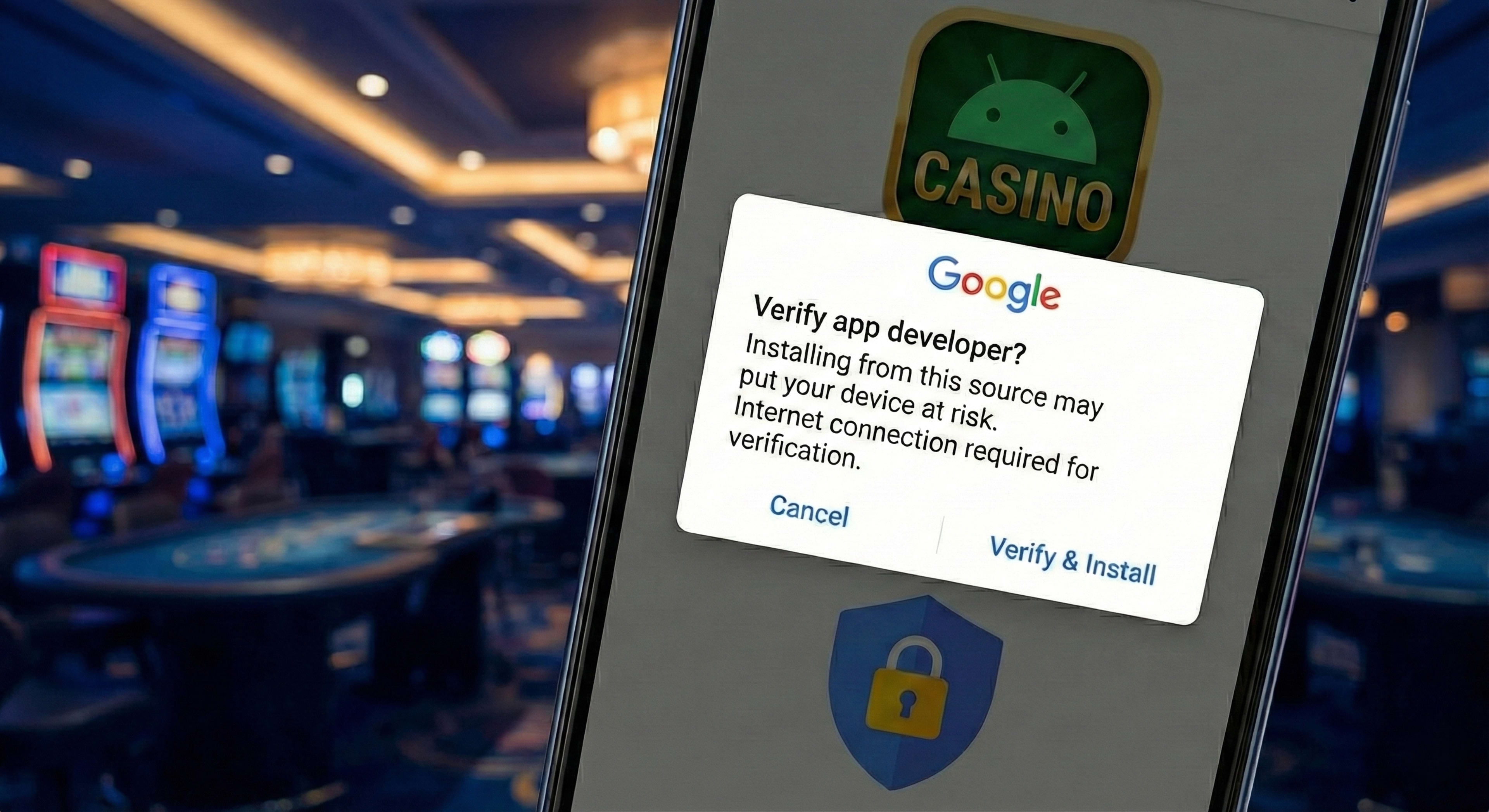
Google has confirmed the introduction of enhanced security measures for sideloading apps on Android devices, aiming to better protect users from potential malware and unverified software. This development, detailed in recent code discoveries within the Google Play Store app version 49.7.20-29, adds layers of verification and user education during the installation of apps from sources outside the official Play Store. The process involves prominent notifications emphasizing the safety benefits of verified apps, such as reduced exposure to malicious code and adherence to security standards. Users attempting to install unverified APKs will encounter a series of prompts, including requirements for an active internet connection to check developer authenticity. If no connection is available, the system will display a message indicating that verification cannot proceed.
This change is particularly significant in the mobile casino industry, where regulatory restrictions often prevent gambling apps from being listed on the Google Play Store in various jurisdictions. In markets like Europe, Asia, and Latin America, operators frequently rely on sideloading to distribute their mobile casino platforms, allowing users to access real-money gaming directly via APK files downloaded from official websites. The new "high-friction" flow introduces deliberate hurdles, such as repeated risk acknowledgments, to discourage casual users from proceeding without understanding the implications. Matthew Forsythe, Director of Product Management for Google Play Developer Experience, described it as an "Accountability Layer" rather than an outright restriction, noting that advanced users can opt to "Install without verifying" after navigating the warnings.
For operators, this poses challenges in user acquisition and retention. Mobile casinos must now invest in clearer communication about app safety, potentially including guides on safely sideloading and assurances of their own verification processes. Failure to adapt could lead to higher abandonment rates during installation, as less tech-savvy players may be deterred by the added complexity and perceived risks. On the user side, the update promotes safer practices by highlighting dangers like data breaches or fraudulent apps mimicking legitimate casinos. This aligns with broader industry trends toward improved mobile security, especially as fraud prevention becomes critical amid rising cyber threats in online gaming. In regions with strict app store policies, such as India or parts of Europe, where mobile payments like Google Pay are increasingly integrated into casino apps, this could indirectly encourage operators to pursue official Play Store listings where feasible, complying with local regulations to avoid sideloading altogether.
Ultimately, Google's move underscores a shift toward proactive user protection in the Android ecosystem, balancing openness with security. As 5G networks enable faster downloads and more immersive mobile gaming experiences, ensuring fraud prevention through such measures could foster greater trust in mobile casinos, benefiting compliant operators while pressuring others to elevate their standards. The phased rollout starting in September 2026 in Brazil, Indonesia, Singapore, and Thailand provides time for the industry to prepare, with full global implementation expected in 2027.
Sources: Android Authority article on sideloading changes; Google Developer Blog on verification.