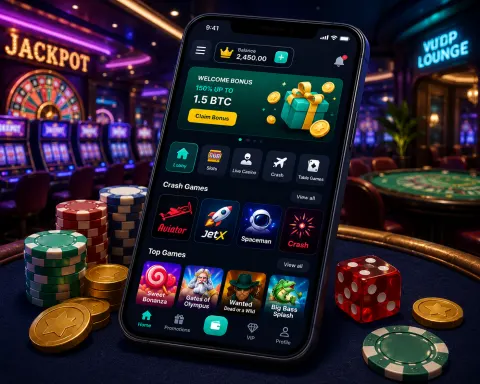
A quick spin is no fun when the game will not load. Lightweight casino apps solve that by delivering the essentials with little data and short load times. This guide covers why they matter, what they include, the technology behind them and how to get the most from them on a slow connection: on a commute, abroad or anywhere with patchy coverage.
A slow connection fails in two places. The phone waits for the next file. The game waits for the casino server to accept the bet. A lightweight app shrinks the first wait by sending fewer files. The second wait stays, because the server still decides every real-money result. The app can show a short holding state only after that result is on its way back.
Why lightweight apps matter
Mobile casinos are packed with high-resolution graphics, animation and sound. That looks great on fast networks and struggles on slow ones. Lightweight apps drop what is not essential, using HTML5 interfaces and simple components, so you can spin and bet with little lag. Focusing on game logic and efficient delivery cuts data use and load times, which means fewer disconnections when your signal is low.
The heavy part of a casino app is usually the media, not the bet itself. A high-resolution lobby, a long intro and uncompressed sound all travel before the first spin. On a fast network those files arrive before the player notices. On a slow network each file adds a pause, and a pause can drop the session. A lightweight app keeps the bet message small and delays the media that the current screen does not need.
How a slow connection changes a casino session
A slow connection affects a casino session in two separate ways. Bandwidth decides how long a download takes, and latency decides how long a single message needs to reach the server and return. A casino app depends on both. The game files arrive through bandwidth, while each bet and each result travels as a short message that depends on latency.
Latency is often the bigger problem for play. A round can finish in a fraction of a second on a steady line, yet a weak signal can add several seconds to each message while the phone retries lost packets. Lightweight apps reduce the number of messages sent per round, so the game waits less often for the server. They also avoid sending status updates that the current screen does not need.
The difference shows up in practice. A player on a stable 4G line may never notice a one-second delay, but the same delay on a moving train can freeze the spin button or make a bet appear twice in the history. A well-built app handles that case with a clear waiting state and confirms the result from the server before it moves on. A poorly built app may draw the reels as if the round were complete when the server has not yet replied.
What efficient casino apps have in common
- Optimised graphics: compressed images and vector icons instead of large bitmap files keep the look sharp without the data cost.
- Adaptive streaming: sound and video adjust to your connection speed, so you still hear key sound cues without downloading full-quality tracks.
- Fewer background processes: non-essential animations, notifications and chat syncing are switched off, leaving bandwidth for the game.
- Progressive loading: the main screen appears first, then bonus features and secondary assets, so you can start playing almost at once.
Optimised graphics work because a slot reel is a set of small images. Compressed images and vector icons keep those symbols sharp. The download stays smaller than a folder of full-size bitmaps. Adaptive streaming works because sound and video are the heaviest remaining files. The app lowers their quality when the signal drops and raises it when the signal returns. Key cues, such as a win sound, stay. Full-quality tracks wait.
The technology behind fast mobile casinos
| Technology | What it does |
|---|---|
| HTML5 Canvas | Draws graphics in real time without plugins |
| WebAssembly | Runs game code at near-native speed |
| Service workers | Store game files on the phone for faster reloads |
| Content delivery networks (CDNs) | Serve files from servers near you |
Together they let games run smoothly on a wide range of phones and connections. Service workers, for example, can fetch common files during a brief signal boost, so the next session loads faster.
HTML5 Canvas draws each frame in the browser. The casino does not ship a separate plugin for the reels. WebAssembly runs the tight parts of the game code in a compact form the phone executes quickly. Service workers store files that rarely change, such as the interface shell and the main icons. A content delivery network keeps copies of those files in several regions. The phone fetches a copy from a nearby server.
Those pieces speed up files. They do not settle the bet. The stake and the result still travel to the casino's own server. A nearby file server shortens the download. It does not hold the balance or draw the round.
How we choose a lightweight app
- App size: a smaller install usually means fewer heavy assets. We look for apps under 50 MB where possible.
- Start-up time: we time how fast the home screen appears after tapping the icon. Under five seconds on 3G is the aim.
- Data use: we measure mobile data over the first sessions and favour apps that use under 10 MB an hour.
- Game balance: light is good, but we still want the popular games, such as slots, blackjack and roulette.
Browser casinos can be lighter still, as nothing is installed. Our guide to browser casinos vs apps compares the two.
App size is the install package. It is separate from the data used after the app is open. An install under 50 MB usually means large videos were left out of the package. Start-up time is the gap between the tap and a home screen the player can use. Under five seconds on a 3G-class connection is the working target we time.
Reading app size and start-up claims
Casino apps often advertise their size and speed, but those numbers mean little without context. The install size is the package downloaded from the store. The data used is the traffic sent while you play. The start-up time is the interval between tapping the icon and the first usable screen. Each measure answers a different question, so a small install does not guarantee low data use.
A small install can still use a lot of data. An app may keep its package small and then stream large promotional videos on the lobby screen. A large install can use little data if the heavy files are stored once and reused from the phone. For that reason a single number should never settle the question. Read the three numbers together, and check which connection type each one describes.
Start-up time depends on the handset as well as the app. An older device with less memory loads the same files more slowly than a new one. When you compare apps yourself, use the same handset for each one, and treat any single reading as one data point rather than a final verdict.
Tips for slow networks
- Close apps that sync data in the background.
- Switch on Lite Mode if the app has one; it usually turns off extra animations.
- Use a stable Wi-Fi network when you can. A weak but steady signal beats unstable mobile data. On public Wi-Fi, check that the casino connection is secure.
- Turn on your phone's data saving: Data Saver on Android or Low Data Mode on iPhone.
- Clear the app's cache now and then to remove outdated files.
- Choose RNG games over live dealer tables on a weak signal; video streams need far more bandwidth.
Close background apps before you open the casino. Mail, maps and social apps keep refreshing, and they use the same radio as the game. Switch on Lite Mode when the casino offers it. Lite Mode usually drops extra animation and lowers image quality, which frees capacity for the round.
Use a steady Wi-Fi network when you have one. A weak steady signal keeps the socket open. An unstable mobile signal drops it between rounds. On public Wi-Fi, confirm the session is encrypted before you log in. Turn on the phone's own data saver as well: Data Saver on Android, or Low Data Mode on iPhone. Clear the app cache when loads get slower, because stale files can block a fresh download.
Planning data and session length on a metered plan
A metered mobile plan changes how you should plan a session. Start by checking how much data remains in your monthly allowance and how your carrier handles speed after the limit is reached. Once a plan is throttled, even a light app feels slow, because the connection speed drops sharply.
Session length matters as much as the hourly rate. Ten minutes of basic play uses a small share of a plan, while an hour of live video can use far more. Setting a fixed session length makes the data cost predictable. Leaving a game paused does not usually reduce the cost of a session, because the connection still has to stay open for the next round.
Some players download the app and its games on Wi-Fi first, then play on mobile data. That approach suits games that rely on cached files. It does not remove the need for a live connection during real-money rounds, so the mobile signal still needs to be reasonably steady.
Signs that an app is too heavy for your connection
- The lobby takes more than ten seconds to show games on a connection that loads other websites quickly.
- Animations stall or the reels freeze between spins, even when the signal bars look full.
- The app asks for large file updates each time it opens.
- The balance or bet history lags behind a finished round.
Any one of these signs can have other causes, such as a congested cell or a crowded network. Several together suggest the app is sending more data than the connection can carry. Switching on Lite Mode, testing a demo game or trying the browser version usually shows whether the app itself is the source of the problem.
Closing the app and reopening it after a short pause clears many stuck screens. Check the bet history before you place another stake, so you know which rounds the server has already settled.
Caching and offline play
Many apps use service workers or local storage to keep core game files on your phone: the interface, sound cues and main graphics. With those stored, a game opens at once instead of downloading every file again, which saves data and time on a metered connection.
Caching does not make real-money play work offline. Every real-money bet is sent to the casino's server and settled there, so a dropped connection pauses the game. Most games then finish or void the open round under their rules and show the result when you reconnect. Some apps let you play demo games from the cache with no signal.
To make the most of caching, open your favourite games while you still have a good connection, so their files are stored before you need them.
Open those games once on a strong connection before you travel. The service worker can store the interface, the sound cues and the main graphics during that visit. The next open reads those files from the phone. The phone still sends each real-money stake. The casino server records the stake, draws the result and returns it.
Choosing between a native app and a browser version
A native app is installed on the phone and keeps its interface files locally. A browser version runs inside the phone's web browser and loads its files on each visit, unless the browser stores them. On a slow connection, the native app usually wins on repeat visits, because the core files are already on the device. The browser version wins on storage, since nothing needs to be installed.
The browser version can also suit a short session on a borrowed phone or a device with little free space. It rebuilds the screen on each visit, so the first load may take longer than a native app's start-up. Once loaded, the game performance depends mostly on the same connection and the same server.
Whichever format you choose, the same rules apply to real-money rounds. The bet must reach the casino server, and the result must return before the balance updates. A lighter format reduces the files you download. It does not change where the round is settled.
Security and privacy
Speed should never cost security. Install casino apps only from official app stores or the casino's own website, which protects you from tampered copies carrying malware. Once installed, turn on PIN, fingerprint or face login and session time-outs, so nobody else can use the app if you lose your phone.
Read the app's privacy policy to see what data it collects. A good lightweight app asks only for what it needs to process bets and payments. Check that it uses secure connections (HTTPS and encrypted WebSockets), and use a VPN on public Wi-Fi where that is permitted by the casino's terms and the law where you are. Our responsible gaming page covers the account limits to set as well.
Read the privacy policy for the data the app collects. A lean casino app needs the account, the bets and the payments. It should leave the address book and the photo library alone. Check that the session uses HTTPS and that live updates use an encrypted socket. On public Wi-Fi, use a VPN only where the casino's terms and the local law allow it. Set deposit, loss and time limits before a long session, using the controls on the responsible gaming page.
What comes next: 5G and edge computing
As networks improve, lightweight apps gain the most. 5G and edge computing lower latency and raise capacity, so apps that stripped back their visuals can bring richer graphics and live streams back without slowing down. Edge computing runs game logic on servers near you, cutting the delay between your tap and the result while keeping the app small. Apps are also starting to predict weak-signal areas and store files in advance, so play continues as your connection changes.
Until then, a well-built lightweight app and a few phone settings are enough to play on a shaky network. Compare apps in our mobile casino rankings.
5G raises capacity on the mast and cuts the delay between the phone and that mast. Edge computing runs part of the game logic on a server close to the mast, so the tap reaches a processor sooner. The casino still records the bet and holds the balance. A shorter path changes the wait. It does not change who settles the round.