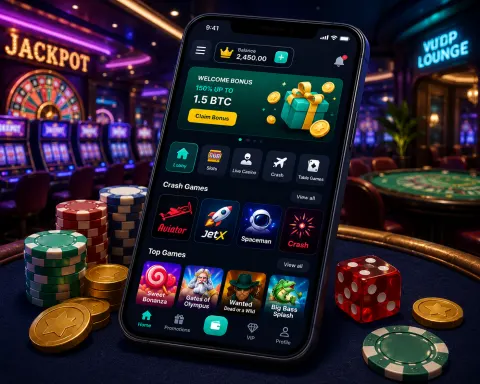
Mobile casino play used to mean downloading an app, registering and installing updates before you could spin a reel. That is changing. Lightweight HTML5 games and fast payments mean a casino can now run entirely in your phone's browser, and many players prefer it that way. This guide compares the two, explains why browser play is growing and covers what it means for security.
A browser casino is a real-money site that loads in Safari, Chrome or another mobile browser. The browser casino keeps the account, the cashier and the game lobby on the website. A player opens the address, signs in and reaches the lobby without an install step. The same session continues if the player moves from a phone to a tablet, because the account lives on the operator's server.
How a browser session works from the first tap
A browser casino session starts with a request to the operator's domain. The phone's browser sends that request over HTTPS, the server answers with the lobby page, and the page then loads the scripts and game files it needs. Nothing is installed in the process. The browser keeps a small amount of data for the visit, such as the cookies that hold the sign-in and the cache that speeds up repeat loads.
The lobby is the first screen a player reaches. It lists games, filters them by category and shows the cashier entry point. Each tile in the lobby opens a game page that starts the HTML5 client. The client then asks the casino server for a session before the first spin, so the server, not the phone, holds the balance.
Closing the tab ends the visible session but not the account. The balance and the bet history remain on the operator's servers, so the next sign-in shows the same funds. A player who wants to remove traces from a shared device can clear the site data in the browser settings. That step removes the cookies and the cache. It does not close the account or change the funds held by the casino.
From app to browser: what changed
A few years ago, native apps were the standard for mobile casinos, and the App Store and Google Play decided which ones you could install. Two things have changed that model: app store rules and player habits.
Apple and Google only allow real-money casino apps in markets where the operator holds the right licence, and they set extra conditions on top. Apple's App Review Guidelines, for example, require real-money gaming apps to be licensed, limited to the regions where they are licensed and free to download, and they cannot sell credits through in-app purchase. Each market, from the UK to the Netherlands, adds its own rules. At the same time, players have come to expect games that load in a browser without using storage or waiting for an update.
The result is a steady move to web-based casinos that run in Safari, Chrome or Firefox with nothing to install.
HTML5 is the markup and script standard that runs casino games inside the page. HTML5 lets a slot, a roulette table or a live stream start from a URL. The phone's browser draws the reels. The casino's servers still decide each result. App stores sit between the player and the operator when the product is a native app. The store listing can be delayed, limited to certain countries or removed. A browser casino skips that listing and publishes under its own domain. Players who already know those store limits can compare the two phone systems in the Android vs iOS mobile casino guide.
Browser vs app: side by side
| Feature | Mobile casino app | Browser casino |
|---|---|---|
| Getting started | Download and install first | Open the site and play |
| Storage | Uses space on your phone | Almost none beyond the browser cache |
| Updates | Installed through the app store or the casino | Always the current version |
| App store rules | Listed only where the store's rules and local licensing allow | No store listing needed, but the same licensing law applies |
| Performance | Built for the device's hardware | Depends on the browser and connection |
| Payments | The casino's own cashier (never app store in-app purchase) | The casino's own cashier, including crypto at some sites |
| Extras | Push notifications, biometric login | Works on any device with one login |
| Security | App store review plus the casino's encryption | HTTPS and the casino's encryption |
Apps still have the edge on animation, notifications and quick biometric login. Browsers win on access, flexibility and reach.
The comparison table separates setup from ongoing play. A mobile casino app stores its program on the phone. A browser casino stores almost all of that program on the operator's servers and caches only what the current visit needs. Updates follow the same split. The app waits for a new build and a store review. The browser casino shows the new lobby the next time the page loads. Payments do not change with that split. The cashier still uses the cards, e-wallets and bank transfers the operator lists for that market.
Storage, cache and what stays on the phone
A mobile casino app is a full program package. Its size depends on the operator and on the number of games, and the package grows with each update. The package sits in the phone's storage until the player deletes it. Some apps also keep sound files and image sets that the player may never use again. Storage pressure matters most on older phones with small internal drives, where a full drive slows other apps as well.
A browser casino keeps its program on the operator's side and sends the browser only what the current page needs. The browser cache holds some of those files so that a repeat visit loads faster. The browser manages that cache and can clear it when space runs low. Players who want to free space can clear the cache without losing the account, because the account is held on the server.
Data use follows a similar pattern. The first load of a browser lobby uses more data than a later visit, because the browser has not yet stored the common files. An installed app spends its data on the first download and then on updates. Both formats use the connection for live video in live dealer games, and that stream is the largest source of data use in either one. A player on a limited plan should check the live dealer data rate against the allowance before starting a long session.
Why browser play is gaining ground
For players, browser casinos mean:
- Instant access: no app store approval, download or install before you play.
- One account everywhere: the same login works on your phone, tablet and computer.
- Less friction: fewer permissions, less storage and no forced updates.
For casinos, one responsive website is cheaper to maintain than separate iOS and Android apps, reaches every device and can be updated at once. Some put the savings into faster game launches and bonuses.
With HTML5, a well-built browser casino now looks and plays almost the same as a native app. For the design side, see our guide to smart casino app design.
Instant access matters most on a shared or borrowed phone. The player grants no install permission. The player leaves no large program behind after the session. One login covers the phone, the tablet and the desktop, because each device only opens the site. Registration still asks for the same identity checks an app signup uses. The form, the email confirmation and any document upload sit on the website. The steps for that signup are set out in the guide to creating an account on a mobile casino.
How HTML5 games load in a browser
HTML5 games run on web standards that every modern mobile browser supports. The game client draws its frames on a canvas, runs its logic in scripts and reads image and audio files for the visual and sound layers. The browser handles the drawing, so one client can run in Safari on an iPhone and in Chrome on an Android phone without a separate build.
Performance depends on three things: the device's processor and graphics chip, the browser version and the connection speed. A recent phone with a current browser usually plays a slot at the same frame rate as an installed app. An older phone may drop frames in a heavy game, and the drop shows most in games with many animated layers. A player who sees stutter can close other tabs, check the connection and try a lighter game before blaming the casino.
Operators tune the game client for web delivery. They compress image files, split the code into parts and load each part when the player opens a game. Those choices shorten the first spin. They do not change the game's rules, the paytable or the return to player. The result of each round is still generated and recorded on the casino's server, which is why a browser session can be audited in the same way as an app session.
The app store problem
Apple and Google enforce strict policies for casino apps. Approved apps must meet local licensing rules, show the required warnings and pass review, and in many countries real-money casino apps are not allowed in the stores at all.
A browser casino does not need a store listing, so it can update without resubmitting a new build. That is a practical advantage, not a legal one: the casino still needs a licence for your country, and you should still check the mobile casino laws where you live. Crypto casinos in particular often run in the browser only, because app stores restrict them further.
Apple and Google review each app build before it can stay in the store. A rejected build stays off the store until the operator changes it and submits again. Many countries have no real-money casino apps in either store, even where a browser casino is lawful. The licence and the local statute decide that lawfulness. Store policy is a second gate on top of the statute. A browser casino still has to follow its licence. The browser casino does not need a fresh Apple or Google review to change a banner, a game tile or a payment method. The rules that apply where you live sit with the licence.
Are browser casinos as secure as apps?
Many players assume apps are safer because they pass app store review. In practice, a licensed browser casino protects you in the same core ways: HTTPS encryption for everything you send, two-factor authentication where the casino offers it, and secure payment gateways. Crypto casinos add on-chain records of deposits and withdrawals.
On a shared or borrowed device, a browser session is easy to close: log out and clear the browser data, and nothing stays behind. Whichever you use, the casino's licence and security matter more than the format. Our guide to mobile casino scams lists the warning signs.
HTTPS encrypts the traffic between the phone and the casino. Two-factor authentication adds a second check at login when the operator offers it. The gambling licence is the control that a store review does not replace. A store badge does not prove that the operator holds a gambling licence. Read the licence name and number on the site before you deposit. Scam sites often copy a real brand's logo and push a download from outside the official domain. Stay on the address you typed, or on an address a trusted review names. A copied logo on a new domain is a warning sign on its own.
Licence, regulator and the browser format
A browser casino must hold the same gambling licence as an app operator in the same market. The format of the website does not replace the licence, and the licence does not change when the player switches from the app to the browser. The licence names the regulator, the territory where the operator may take bets and the conditions the operator must meet.
Players can check the licence in three steps. First, read the licence name and number in the site footer or the terms. Second, search the regulator's public register for that number. Third, confirm that the register entry lists the same trading name and domain as the site. A browser casino that fails those checks should not receive a deposit. A store badge does not replace them, and a missing store listing does not prove that a casino is unlicensed.
Rules on advertising, age checks and responsible play apply to the browser just as they apply to the app. The operator must offer the same limit tools, cooling-off options and self-exclusion routes in both formats. If a browser casino offers fewer tools than its licence requires, the complaint goes to the regulator, not to the app store.
What browser play is like now
The experience is close to identical on both. Browser casinos load fast, adapt to any screen size and give full access to slots, live dealer and table games.
That means you can play from a phone browser at the airport or a tablet at home with no download and no wait. As mobile networks get faster and browsers more capable, the gap keeps shrinking. If you play often and like notifications and Face ID or fingerprint login, an app is still worth installing; see our iPhone and Android app pages. Otherwise, the browser is now the simplest way to play at mobile casinos.
Screen size is handled by the page layout, not by a separate app file. Slots, live dealer tables and table games that the operator publishes in HTML5 appear in the browser lobby. Return to player is a property of the game build, not of the app or the browser. The RTP figure stays with that game. The guide to what RTP means in mobile casinos explains how to read that figure before you compare two copies of the same title. A slow connection still changes the first load. The browser downloads the game files for that visit, and a weak signal delays the first spin. An installed app can keep some of those files on the phone, which helps repeat play on the same device. Push notifications and biometric login remain the clearest extras that need an installed app. Face ID and fingerprint unlock belong to that installed app. A browser tab closes with the session and does not keep a shortcut on the home screen unless the player adds one.
Choosing between a browser and an app
Choose the browser when you play occasionally, use more than one device or do not want to install a large program. The browser needs no install step, leaves little behind and offers the same game library in most cases. It also suits a shared phone, because the session ends when the browser closes.
Choose the app when you play often on one device and want the extras that need an installed program. Push notifications for a finished withdrawal or an expiring bonus work only with the app. Biometric login, such as Face ID or a fingerprint scan, is also tied to the app. Some players prefer the app's smoother response on a phone with a strong processor and a stable connection.
Either choice leaves the odds of a game unchanged. The return to player belongs to the game build, not to the format. Set a deposit limit and a session time before you start, whichever format you choose. A session that runs longer than planned costs the same whether it happens in a browser tab or an app screen.