Key Takeaways:
- Mobile devices now dominate online gambling in key regulated markets, with operators prioritizing localized apps and UX for Africa and LatAm growth.
- European regulators tighten enforcement against illegal mobile apps and sites while adjusting rules to balance player protection and market competitiveness.
- Payment localization and fraud prevention remain critical as digital adoption surges in emerging regions.
Mobile-First Strategies Drive Growth in Africa and Latin America
Operators and suppliers are increasingly focusing on mobile-first experiences to capture growth in Africa and Latin America, where rapid digital adoption and smartphone penetration shape player behavior. EveryMatrix’s Group Commercial Director Daniel Clark highlighted these regions as prime opportunities amid intensifying competition in mature markets. Examples include Betsson’s launch in Cameroon using scalable platform technology, with further expansion eyed in French-speaking African countries. Casino content is gaining traction alongside sports betting in parts of Africa.
In emerging markets, success hinges on localization, including market-specific UX/UI, payment methods, and content. Mobile-led consumer habits demand native apps, fast access, and personalized experiences. Legacy systems often hinder scalability, whereas unified platforms enable quicker market entry, real-time data, cross-selling, and AI-driven tools for personalization and risk management. Clark emphasized that intelligent localization builds trust and supports long-term retention in these dynamic environments.
Denmark Strengthens Crackdown on Illegal Gambling Apps and Sites
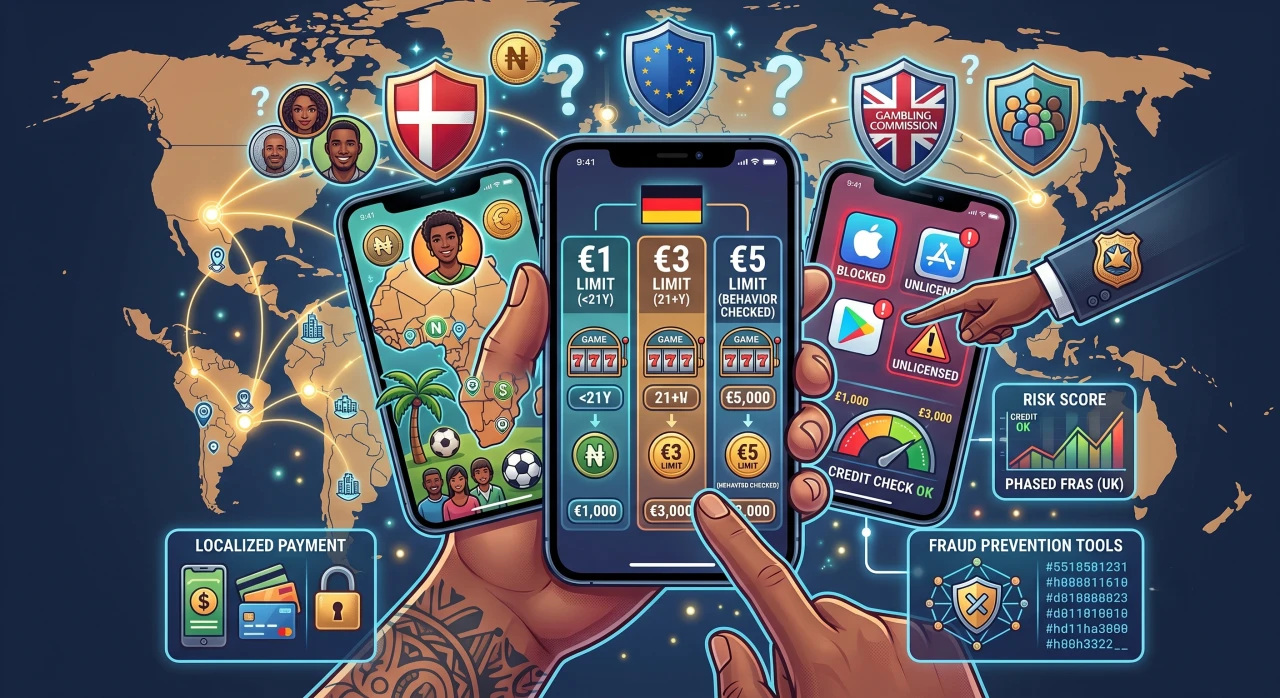
Denmark’s Spillemyndigheden reported blocking 334 unlicensed gambling websites in 2025—a significant increase driven by enhanced surveillance, data analytics, and public tips—while 36 sites voluntarily complied. The regulator improved cooperation with app store owners (Apple and Google) for faster removal of illegal apps and enabled licensed operators to report brand misuse directly on Meta platforms. DNS-level blocking, combined with dynamic measures against mirror sites, reduced traffic to blocked domains by around 34% in analyzed cases.
This enforcement aligns with broader digital shifts: mobile devices accounted for 73% of online gambling revenue in Denmark in 2025, where online casinos overtook lotteries as the leading segment. New legislation (“Spilpakke 1”) expands blocking to affiliate/referral sites and imposes advertising restrictions, underscoring a focus on protecting players from unlicensed mobile offerings.
Germany Raises Online Slot Stake Limits with Tiered System
Effective July 1, 2026, Germany’s gambling regulator (GGL) increased maximum stakes for licensed online slots for the first time since market regulation. The previous flat €1-per-spin cap was replaced by a tiered approach: €1 remains for players under 21; adults 21+ can wager up to €3 per spin; and up to €5 is available to those showing no signs of harmful gambling over a 90-day period. The move aims to modernize rules, enhance competitiveness, and respond to market conditions while maintaining player safeguards.
This UX/product adjustment reflects ongoing regulatory evolution in Europe, balancing innovation with responsible gambling measures tied to age and behavior history.
UK Gambling Commission Advances Phased Financial Risk Assessments
On July 7, 2026, the UK Gambling Commission confirmed a phased rollout of Financial Risk Assessments (FRAs) for high-spending customers. Initial thresholds target extreme patterns (€5,000 net deposits in 24 hours for most, lower for younger/high-risk groups), with full implementation using age-based triggers (e.g., £1,000/24h or £3,000/90 days for 25+). Checks leverage credit reference data for minimal friction and focus on supporting those in potential financial difficulty.
The pilot demonstrated high assessability via existing data. Industry groups expressed concerns over potential friction and data reliability, but the Commission stressed a cautious, evidence-based approach with a grace period. This policy shift impacts mobile casino operations by embedding stronger responsible gambling tools into player journeys.
These developments highlight a global mobile casino landscape shaped by technological adaptation, regulatory vigilance on fraud/security, and efforts to foster sustainable growth through better UX and localized payments. Sources include Every Matrix, iGB, and industry reports from early-to-mid July 2026.
Top 3 mobile casinos
- 1,500 USD + 150 FS
- 1,600 USD + 150 FS
- 1 BTC
18+ · T&Cs Apply · Play Responsibly